


Drum Accessories Make Working with Drums Easier

Do you have a lot of drums at your facility? Drums are not only a convenient storage option, they also help to keep the workplace safe by containing potentially hazardous materials. But despite all they are good for, drums can still be kind of a pain to deal with from time to time.

The good news is there are a number of drum accessories you can purchase to make working with drums a lot easier. Whether you want to open, fill, store or move a drum, Spill 911 has a full line of accessories to help. Below are some of the more common options in the industry today.

Drum Deheaders – Do you need to turn your drum from a closed-head drum to an open-head drum? A drum deheader will open up any steel drum, no matter the size or gauge. Available in manual or electric options, there is a drum deheader for any application.

Continue reading

Stormwater Management: Essential to Environmental Protection

Stormwater management products are an essential part of protecting the environment from the impact of stormwater runoff and erosion. Below is a list of commonly-used items to help with stormwater management and erosion control.

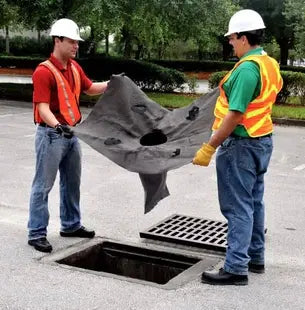
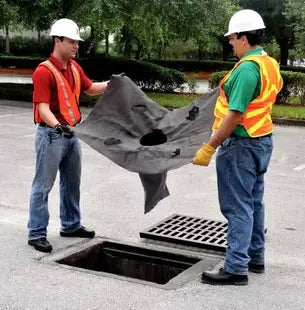
DrainGuards – DrainGuards are an easy and effective way to prevent pollutants from entering a water system. Our line of drain guards is available in oil and sediment or trash and debris models, depending on your application. The oil and sediment models exceed 80 percent in sediment removal efficiency. The “plus model” also adds an additional filter that increases oil and grease absorption. The trash and debris model is designed to catch larger items, such as leaves, cigarette butts and paper goods. In addition to the DrainGuards, we also carry BasinGuards, CurbGuards, GrateGuards, GutterGuards and InletGuards to help protect those applications as well.

Continue reading

SPCC for Agriculture: Are You Prepared?

The deadline for compliance of the Environmental Protection Agency’s “SPCC for Agriculture” initiative is this Friday May 10, 2013. Chances are that if you own or operate a farm, you’ve known about this deadline for some time now and probably already have a plan being implemented already. But just in case there are any farmers out there who are still putting the finishing touches on their SPCC plan, or perhaps having trouble getting one started, here is a quick overview of what the EPA is requiring with this initiative.

First off, let’s start by going over what SPCC actually is. The EPA’s SPCC program is an Oil Spill Prevention, Control and Countermeasure program designed to prevent oil spills from entering waters of the United States and adjoining shorelines. The EPA is now requiring farmers to come up with a SPCC Plan to help prevent oil spills from happening. This plan will also help farmers from damaging their water resources that are needed for farming operations.

Continue reading

Recycled Rubber: Emerging Trend in Parking

There is much to consider when designing and building a parking lot. Most of these items revolve around parking lot safety, such as proper lighting, traffic flow, and location and structure of signs and wheel stops. In addition to safety, procuring products that will minimize liability, yet are attractive and easy to maintain is key to building high quality parking lots.

Industry-recognized parking lots use recycled rubber structures, such as RubberForm’s Sign Base, because they are aerodynamic and heavy enough to stay upright, yet light enough to be tipped and rolled to another location. For parking bumpers, blocks, sign stands or speed bumps, recycled rubber is also more cost effective, and less damaging to vehicles and their drivers than concrete, cast iron or asphalt.

Recycled rubber is easy to maintain as it is resistant to temperature variations, moisture, UV light, oils, fuels, and salts. It also does not rust, chip, crack or crumble.

Parking experts also agree that building environmentally-friendly and sustainable parking lots is becoming vitally important for our communities. Well-built parking lots can encourage use of mass transportation, which cuts down the number of people commuting and driving their cars, thereby reducing our carbon footprint.

Recycled rubber is an emerging trend in parking because of its “green” and sustainable properties. According to an International Parking Institute survey, “many new facilities are built to the demanding standards of Leadership in Energy and Environmental Design (LEED) certification. These include implementing recycling systems, such as … using local and recycled materials in construction…”

RubberForm Recycled Products use recycled tire rubber and other environmentally friendly materials to manufacture the products needed to build and develop industry-rated parking lots. RubberForm is a member of the USGBC — U.S. Green Building Council. Our environmentally friendly products are GreenSpec listed and count toward LEED certification credits for green building projects.

This is a guest blog post by Jamie Rexinger of RubberForm Recycled Products, a company located in Lockport, NY that specializes in using recycled tire rubber to manufacture products such as sign bases, speed bumps, wheel stops and many other commonly-used items.


Hazmat Training: What is Required?

When working in a facility or industry where hazardous materials or waste are present, it is crucial that all workers have undergone hazmat training. The most basic type of hazmat training is General Awareness and Familiarization Hazmat Training. This allows hazmat employees to learn the Hazardous Material Regulations that apply to each type of hazardous materials, and how to identify hazardous materials. It also teaches the hazard communication requirements. These are the requirements that must be met in the marking, labeling, placarding, and drafting of shipping papers of hazardous materials. It must be clearly communicated that there are hazardous materials in these containers, and also what type of hazardous material it is. For example, whether the material is a Class 7 Radioactive material, a liquid hazardous material in non-bulk packaging, or a possible marine pollutant, must be clearly communicated in all shipping papers, marking, and labeling.

Continue reading